In active development · Rust + Bevy

A city builder where the city has to actually work.

You draw the roads and zone the land. Every building is designed on the spot to fit the lot it's given, and every car on the street is a resident on the way somewhere, with a parking space already booked at the other end.

Urban Sprawl is an early sandbox. There's no economy yet, and much of a city is still missing. What's here is being built from the ground up, and each piece has to work properly before the next goes on top.

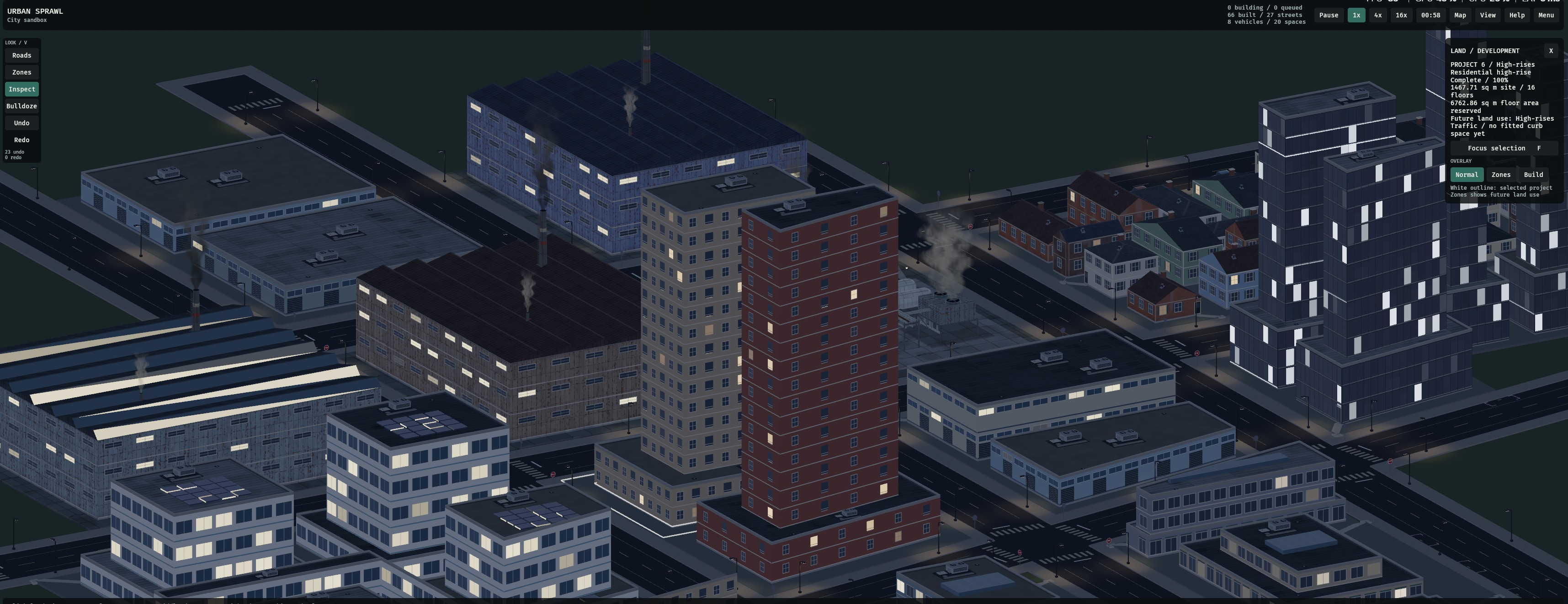
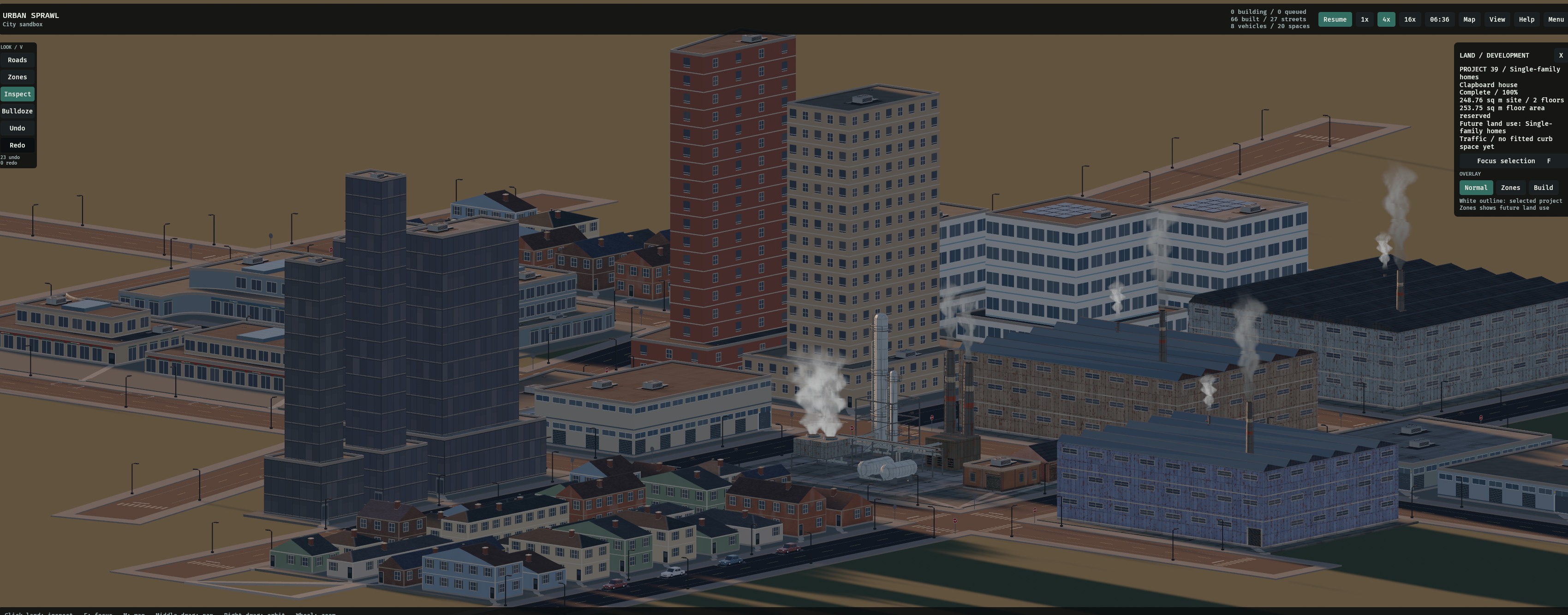
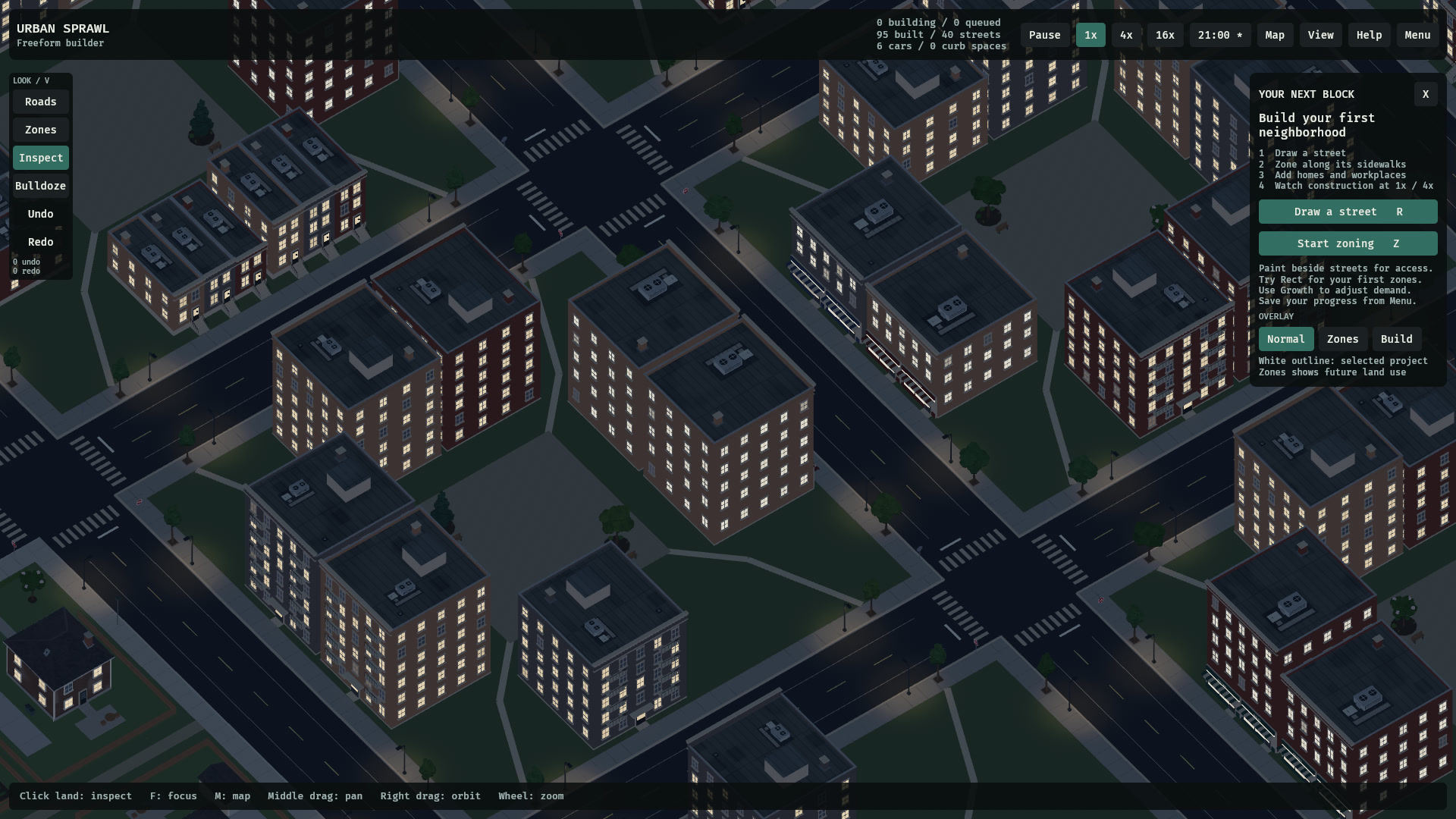
A city at night with apartment towers, stepped offices, factory buildings and smaller homes connected by lit streets
A player-built city after dark, straight from the game with the interface left on. September 17, 2026.
Engine
Rust and Bevy, written from scratch
Buildings
Generated to fit each lot
Traffic
Up to 64 residents with daily routines
Status
Early sandbox, no public build
The game

Three tools, and a city that answers back.

A new city begins as an empty map. You lay down streets, decide what the land beside them is for, and the builders take it from there. The interesting part is what happens next: how a building makes sense of an odd-shaped lot, and whether the streets you drew can handle the people who move in.

1

Draw the streets

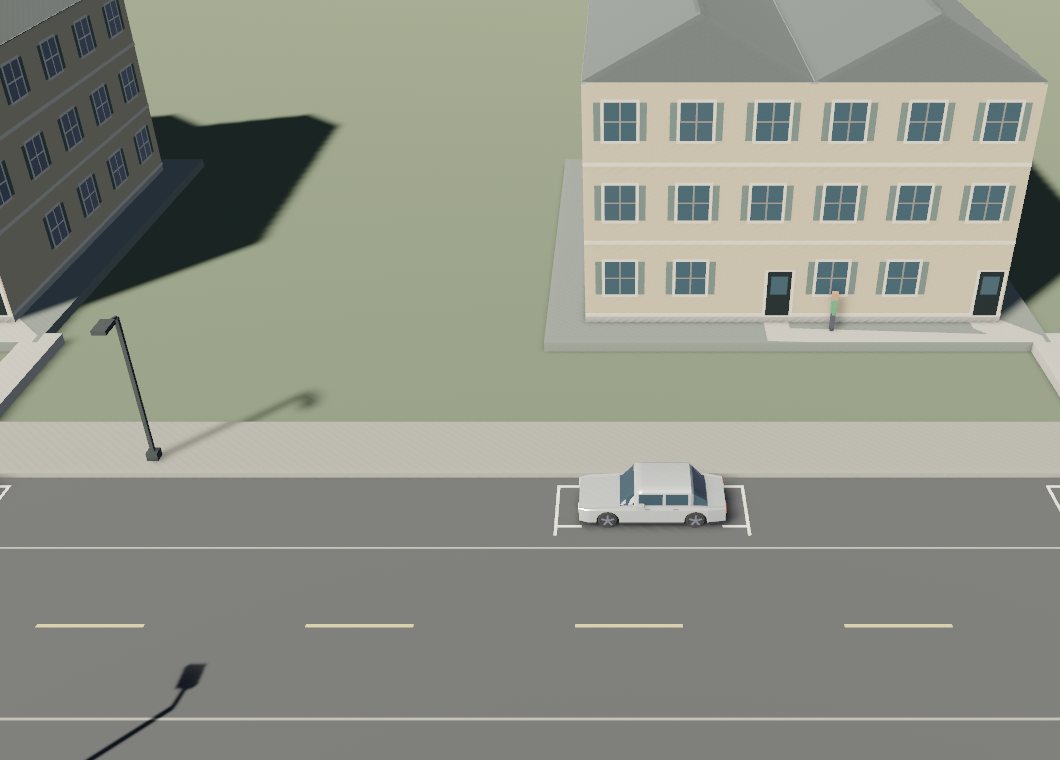
Straight roads or curves, from quiet one-ways to four-lane streets and avenues with a painted median and left-turn pockets. Junctions, turn lanes and signal phases are worked out from what you draw, and undo is there for the intersection you'll regret. Land with no road access stays empty.

Splines · lane presets · undo and redo
2

Zone the land

Pick one of five housing densities, five kinds of commerce or three of industry, then paint it on: a tidy rectangle, or the awkward wedge left between two curved roads. There's no catalogue of prefab buildings. Each one is generated for its lot, with setbacks, frontage and parking considered.

13 building programs · freeform zones
3

Watch it fill in

Buildings go up in stages: foundations, frame, walls, finishing. Residents then keep daily routines, commuting to the offices you zoned or running an errand, and the streets go quiet at night. Speed it up, pause to look around, or bulldoze a project and pretend it never happened.

Construction · routines · day and night

Not here yet: money, a population model, city services, utilities and public transport. For now, growth follows demand targets you set yourself.

Try it

Why rush hour needs smarter lights.

A recent round of work put up to 64 commuters on a single main road and sent them to work in the same morning window. A fixed-time signal, which splits every cycle the same way whoever is waiting, fell behind and never caught up. Signals that respond to waiting traffic kept pace. Here is a small version of that experiment: two identical junctions, fed exactly the same cars. Turn the traffic up, switch on the commuter rush, and watch the fixed-time queue.

Fixed-time

25 seconds of green each way, every cycle, whoever is waiting.

Average delay
0 s
Waiting now
0
Cars through
0

Actuated

Holds green while cars keep coming (up to 45 s), and gives it up once the road empties.

Average delay
0 s
Waiting now
0
Cars through
0
Cars waiting, last five minutesFixed-timeActuatedpeak scale 10

A simplified illustration running in your browser at four times real speed: one lane each way, no turns and no pedestrians. Delay is the extra time a car spends compared with an empty road, averaged over the last 60 cars through and every car still queued. The game's own traffic model is considerably more involved.

Development log · updated September 30, 2026

Where things stand.

Most recent work has gone into traffic and the people behind it: signals that respond to what's waiting, pedestrian crossings, parking, getting vehicles through junctions without sending them into each other, and now residents who walk, cross the street and share a car. If you've seen the older version of the game, this is a ground-up rebuild; the original and its notes are in the archive.

Working now

The sandbox

Road editing, freeform zoning, 13 building programs, staged construction, a day and night cycle with scheduled lighting, undo and redo, and saves that remember everything, down to a car halfway into a parking space.

Just finished

Households and crosswalks

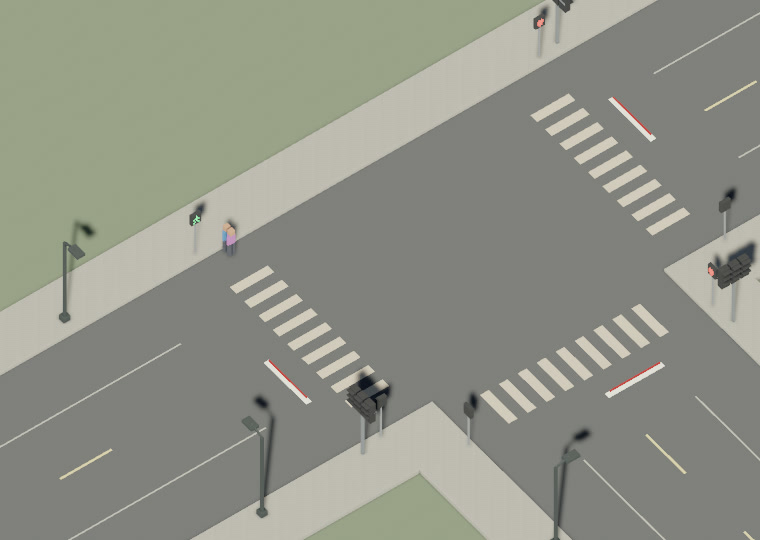
Residents of a new city now cross the street, at a crosswalk on every corner: beside the green at signals, where turning cars wait for them, and ahead of the cars everywhere else. They live in households of one to four people sharing one car, and one home in five keeps none. And demolishing a building no longer makes anyone vanish: people inside leave, people on the way find it closed and turn for home, and a demolished home's household moves out as each member gets back.

Up next

Finishing the wider roads

The multilane work left over from the avenues: lanes that end and merge in turn, turn lanes where the other lanes have to shift aside, parking along four-lane streets so homes can face them, and two-lane one-way streets. Buses come after that, then freight and rail, and the rest of the city simulation after those.

Staying inside the budget.

Traffic is allowed 2 milliseconds of processor time per frame. Every test scene is measured at 1×, 4× and 16× speed, and its worst-case estimate across all three has to fit. These are the current ceilings, as a share of that budget.

  • 32 residents, city grown from an empty mapunder 33%
  • 32 commuters, neighborhoodunder 33%
  • 32 residents, avenue with turn pocketsunder 40%
  • 32 residents who walk, shops among the homesunder 50%
  • 32 residents, four-lane streetunder 50%
  • 64 residents, neighborhoodunder 60%
  • 32 residents who cross at signals and stopsunder 60%
  • 32 residents and 16 pedestrians, test neighborhoodunder 67%
  • 65 residents in households sharing 26 carsunder 75%
  • 64 residents, four-lane streetabout 75%
  • 64 commuters at the rush, corridorup to 96%
Availability

Not playable yet.

There's no public build and no release date. When there's something worth your time, it will be announced here first.

Back to the dev log
Current stage
Early sandbox
Public download
Not yet
Release date
Not announced

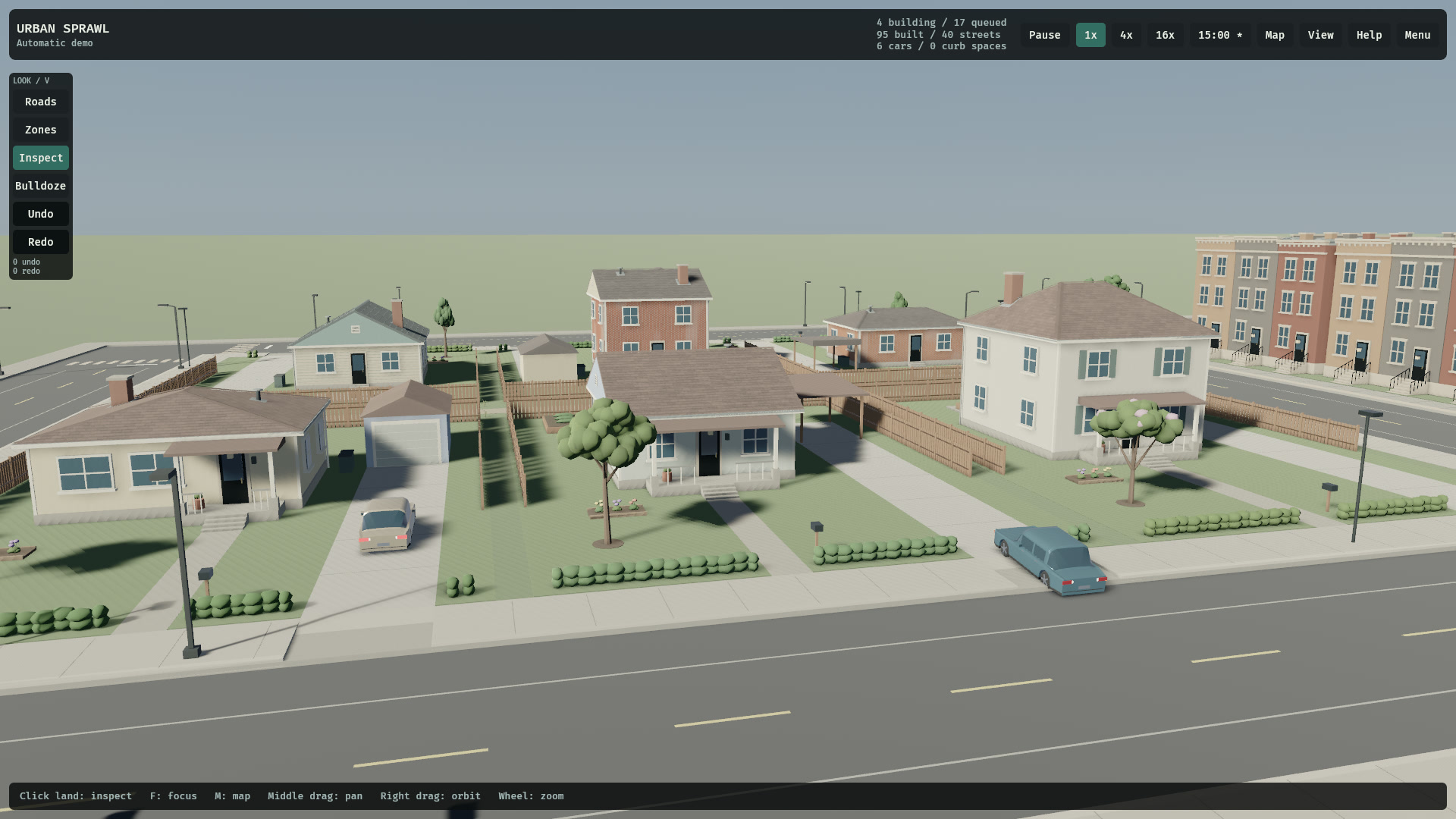
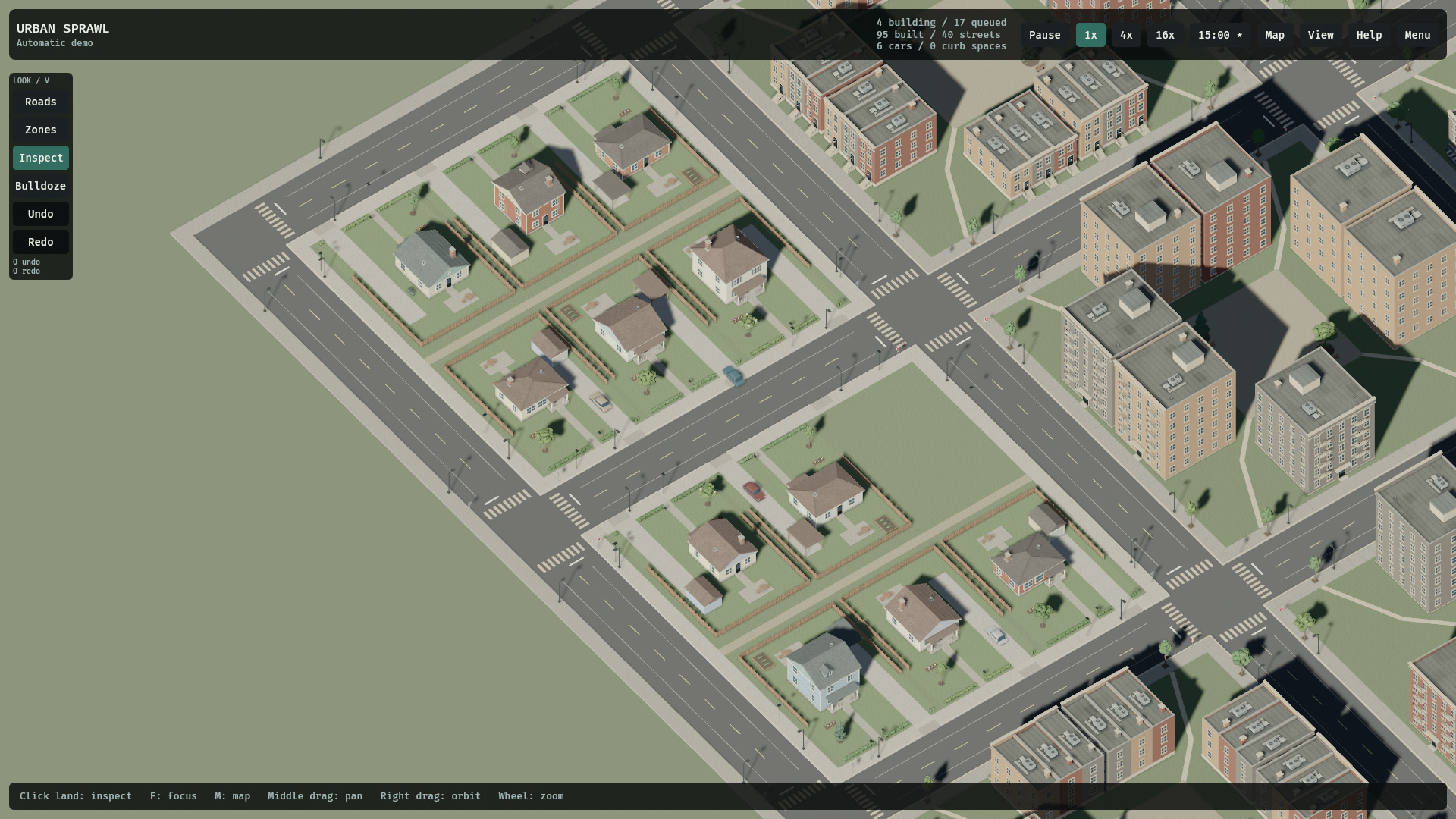
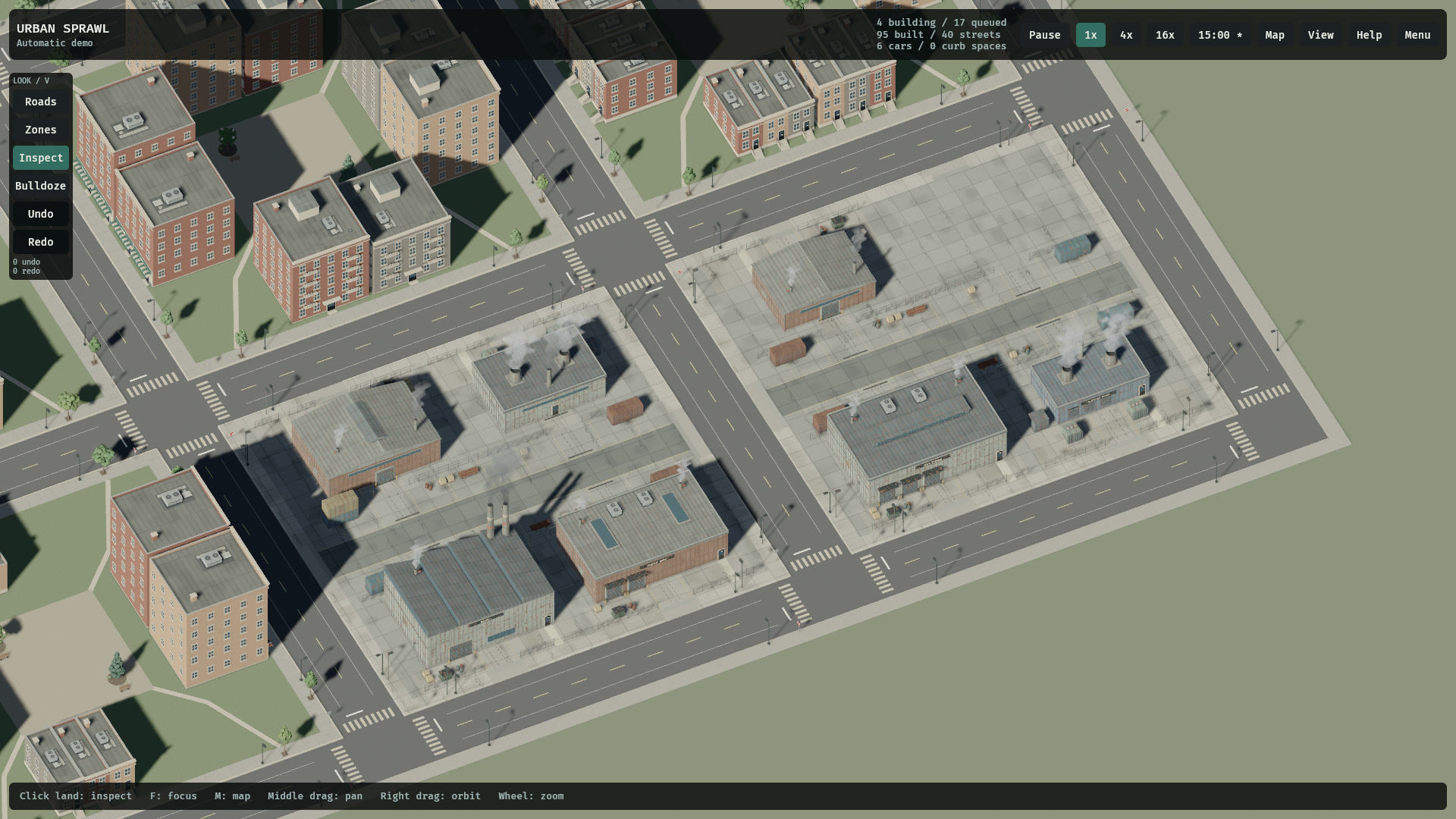
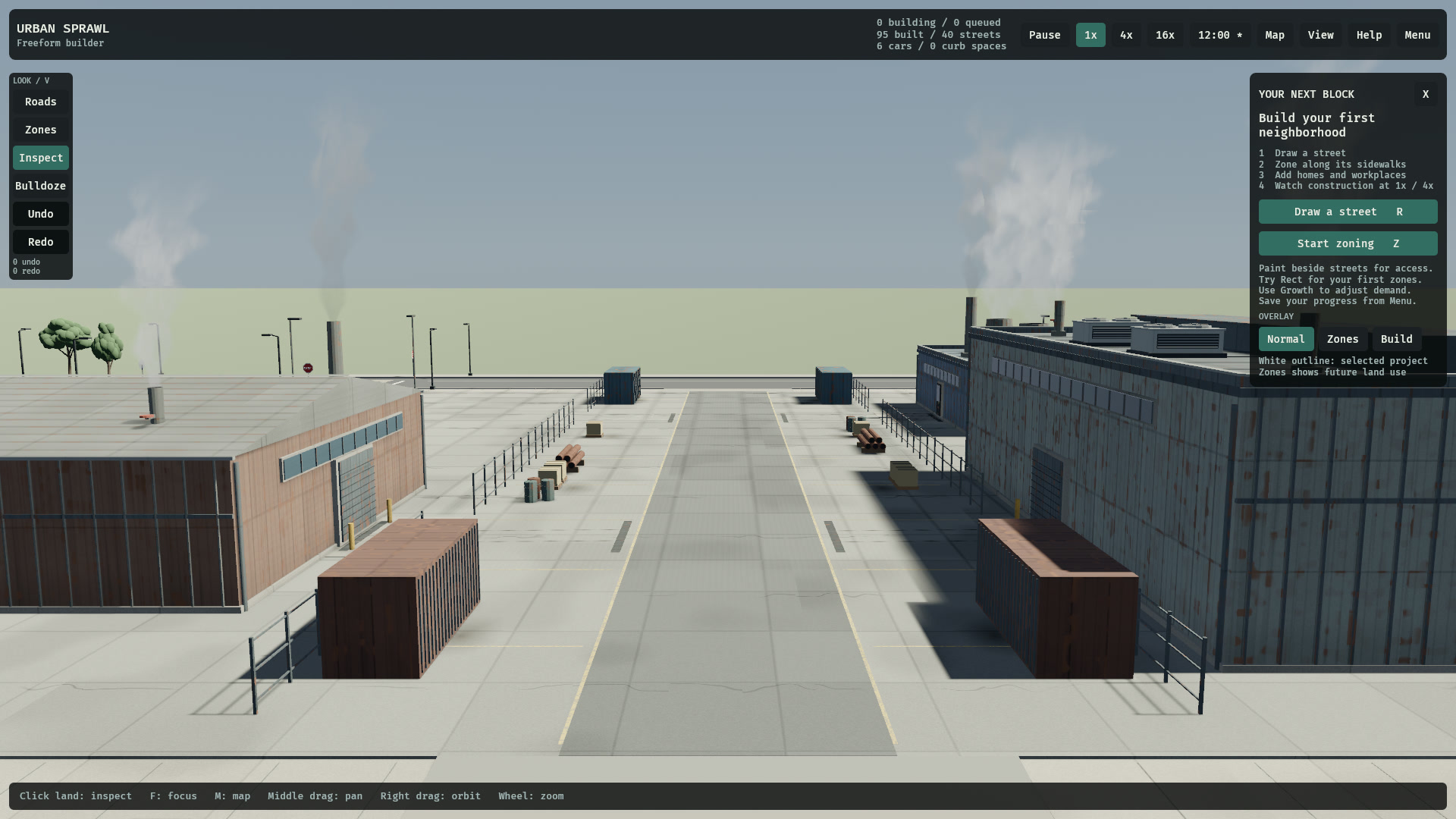
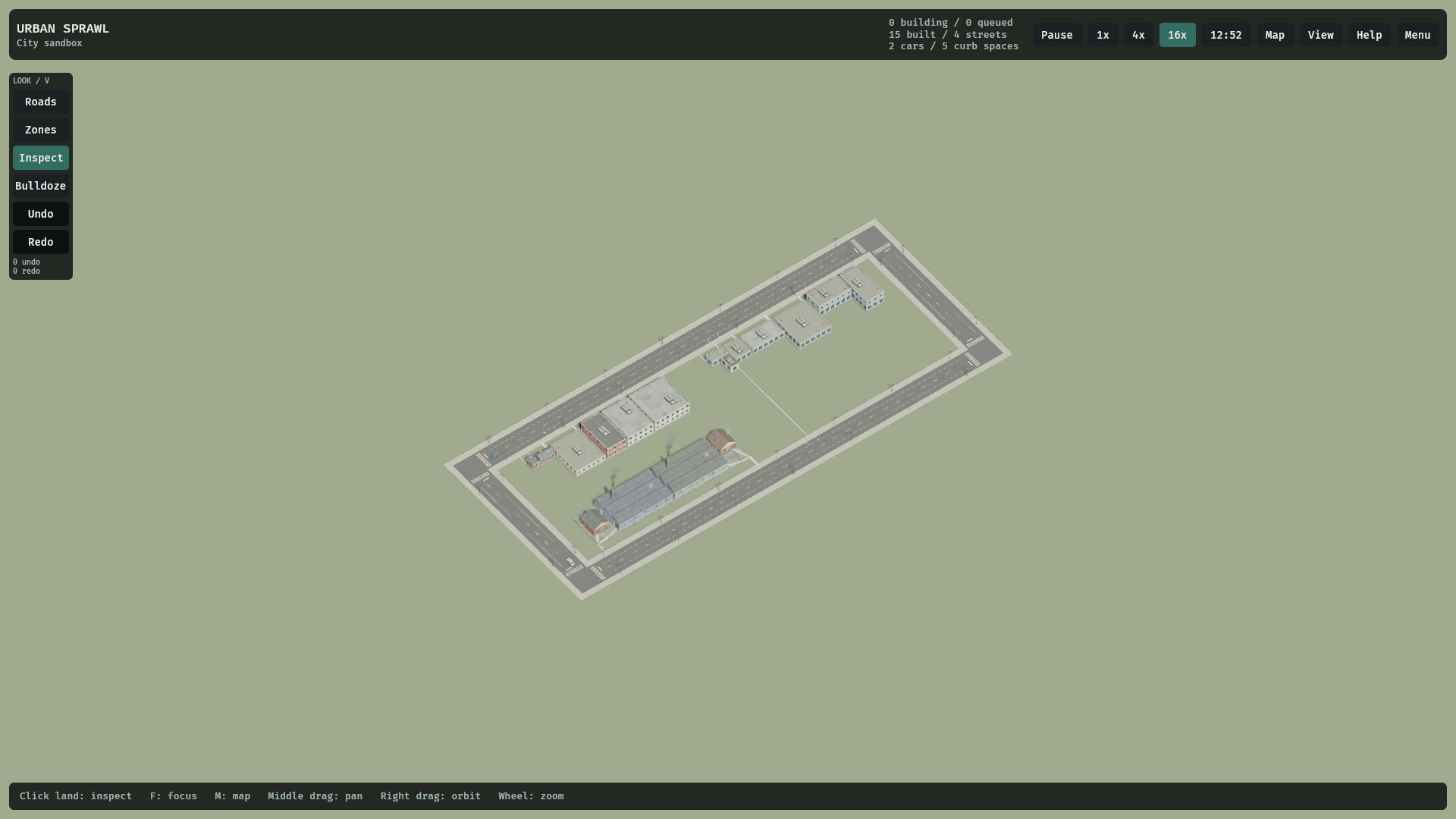
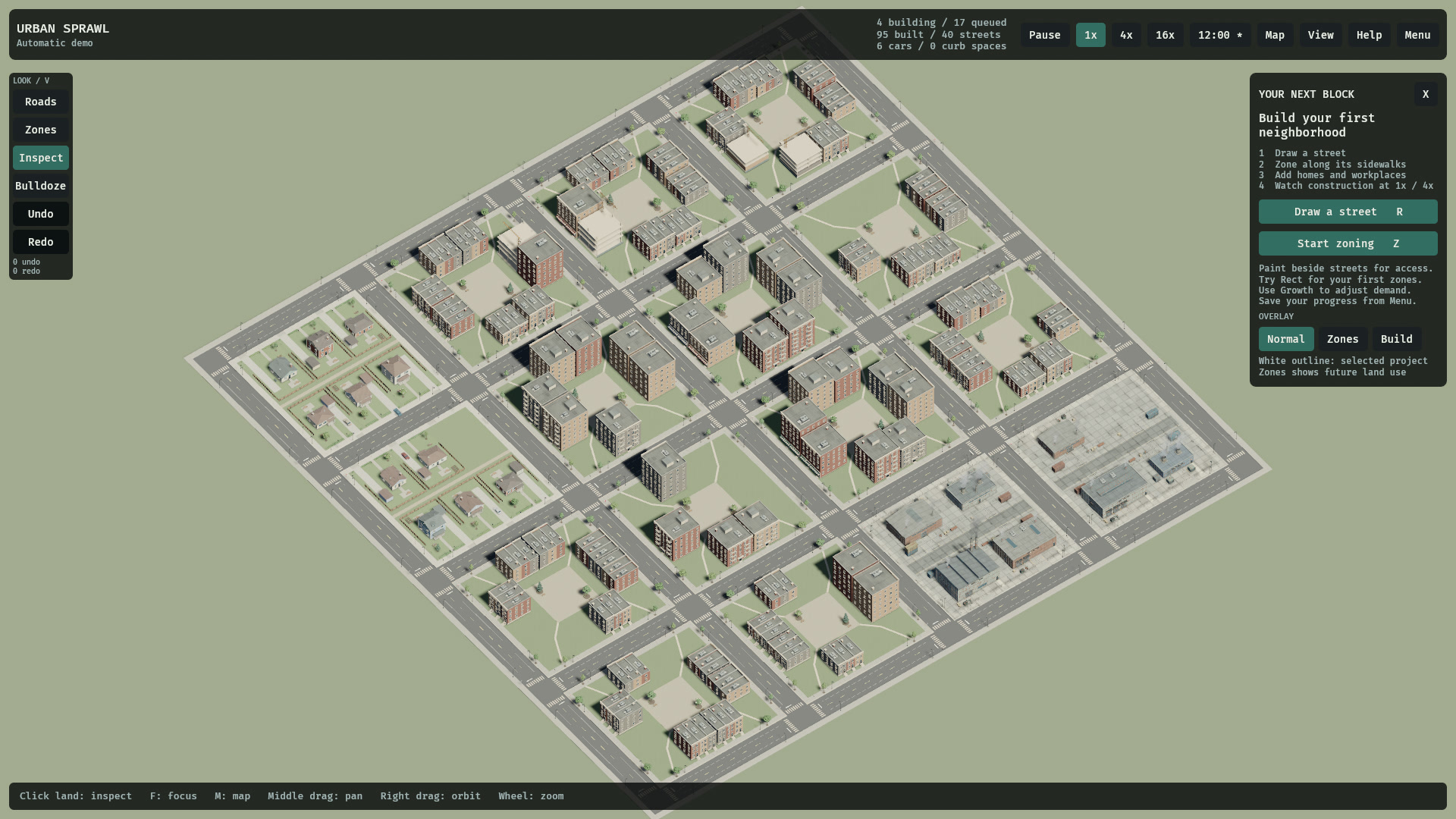
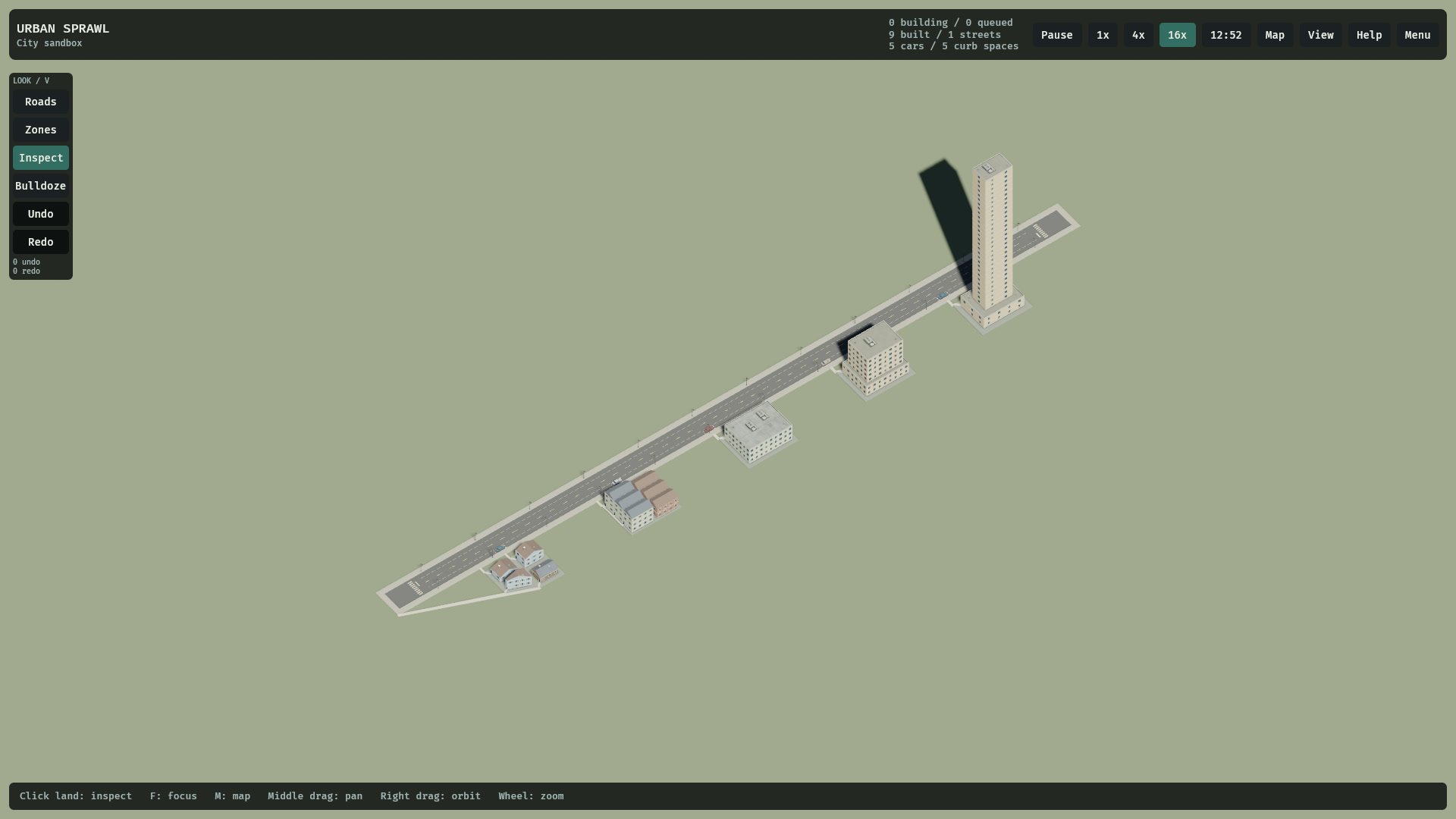
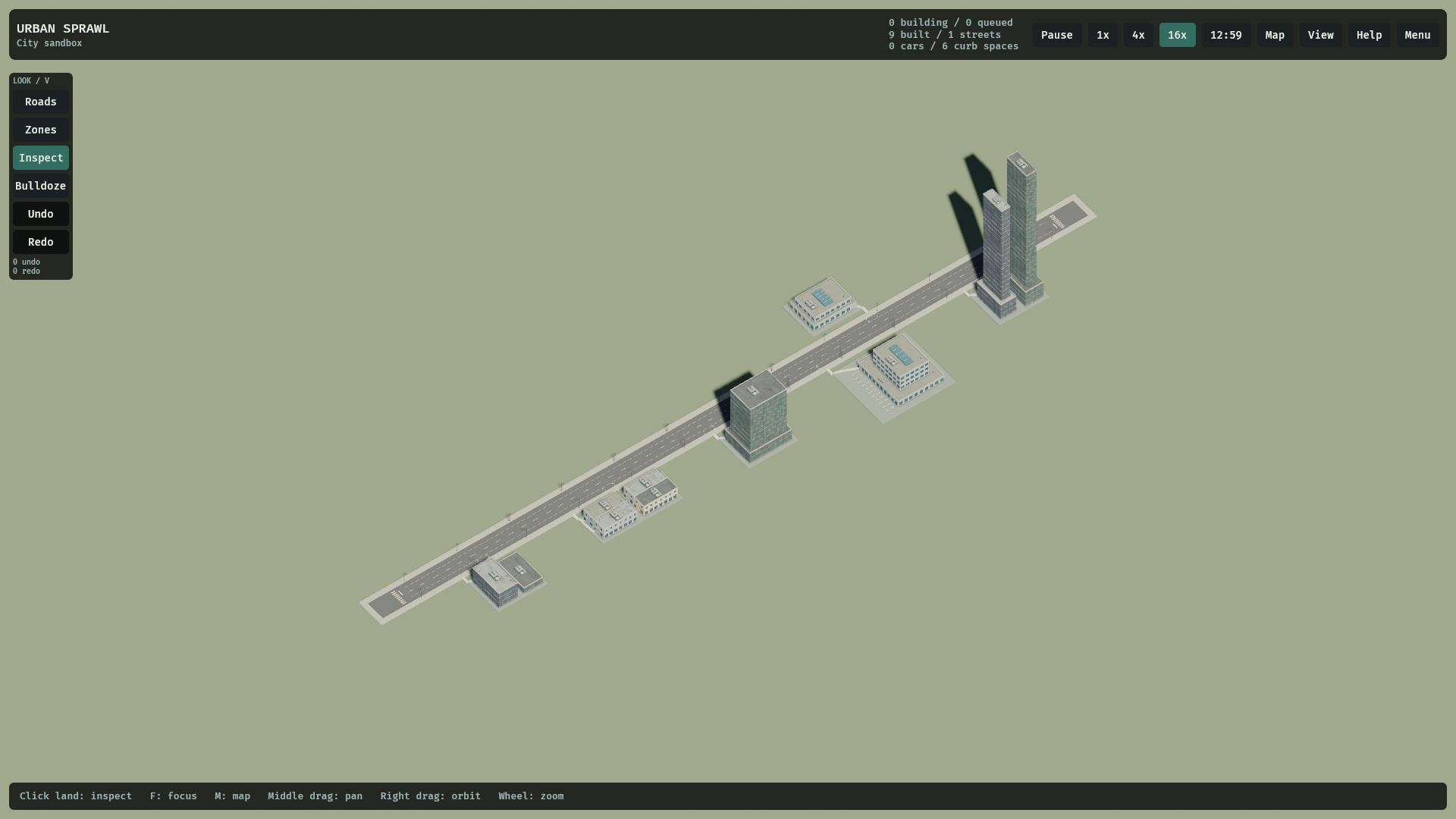
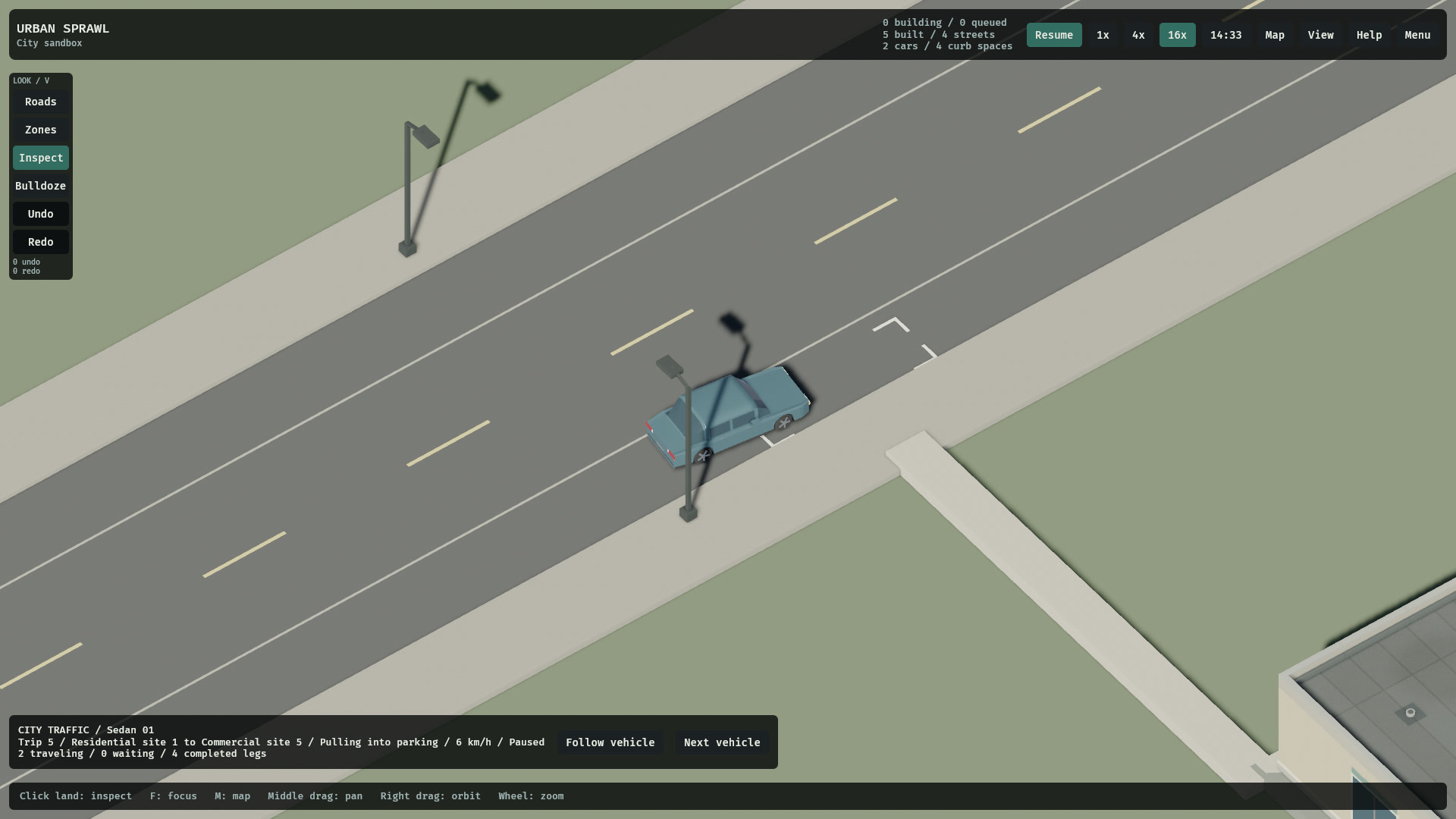
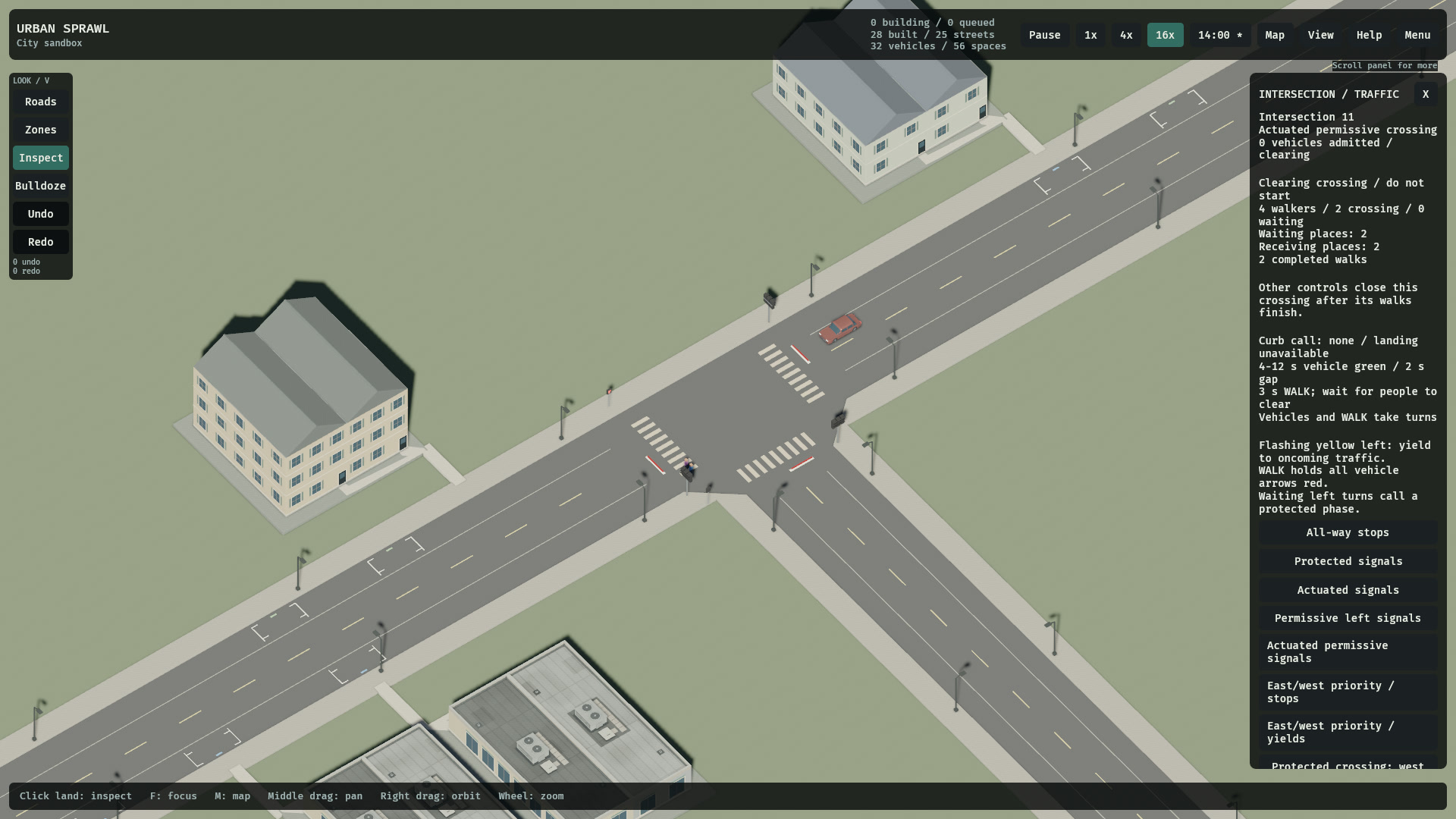
The screenshots show the development build. Some scenes were set up specifically to test one feature at a time.